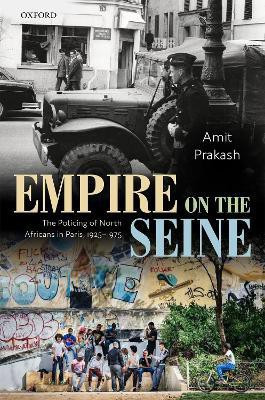
Empire on the Seine(English, Hardcover, Prakash Amit)
- Prakash Amit
Paperback & Hardcover deals ―
Amazon IndiaGOFlipkart ₹ 13075SnapdealGOSapnaOnlineGOJain Book AgencyGOBooks Wagon₹1,064Book ChorGOCrosswordGODC BooksGOe-book & Audiobook deals ―
Amazon India GOGoogle Play Books GOAudible GO* Price may vary from time to time.
* GO = We're not able to fetch the price (please check manually visiting the website).
Know about the book -
Empire on the Seine(English, Hardcover, Prakash Amit) is written by Prakash Amit and published by Oxford University Press. It's available with International Standard Book Number or ISBN identification 0192898876 (ISBN 10) and 9780192898876 (ISBN 13).
Why are relations between minorities and the police in France so fraught? Stripping away the myth that this tension is a sudden and recent disruption of its universalist republican tradition brought on by the presence of North African immigrants, Amit Prakash locates the origins of contemporary conflicts in race and empire in France's history. In Empire on the Seine, Prakash argues that the metropole and the colony dynamically co-developed a policing regime over the course of the nineteenth and twentieth centuries to manage colonial and racial difference. With the North African community emerging as a sizable and durable presence in Paris after World War I, this policing became a key state practice in imagining and administering the immigrant population. Prakash shows that despite the French state's current reluctance to use race as an official category, racial thought and racial targets animated police services, social services, and urban planning schemes from the 1920s until the 1970s. Using police archival records, reports from colonial officials, urban planning and housing studies, and the records of French social workers and immigrant associations, Prakash shows that colonial racism was integrated into the policing of Paris and that architecture, urbanism, and social housing assumed police functions for colonial and postcolonial migrants. In light of this history, contemporary social and racial segregation, periodic protests and rioting against police violence, and the aggressive posture of the Parisian police emerge as the material traces of French colonialism in the metropole. The city of Paris was the capital of an empire and its imperial shadows are long.
