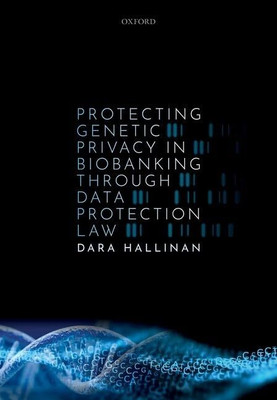
Protecting Genetic Privacy in Biobanking through Data Protection Law(English, Hardcover, Hallinan Dara)
- Hallinan Dara
Paperback & Hardcover deals ―
Amazon IndiaGOFlipkart ₹ 16295SnapdealGOSapnaOnlineGOJain Book AgencyGOBooks Wagon₹221Book ChorGOCrosswordGODC BooksGOe-book & Audiobook deals ―
Amazon India GOGoogle Play Books GOAudible GO* Price may vary from time to time.
* GO = We're not able to fetch the price (please check manually visiting the website).
Know about the book -
Protecting Genetic Privacy in Biobanking through Data Protection Law(English, Hardcover, Hallinan Dara) is written by Hallinan Dara and published by Oxford University Press. It's available with International Standard Book Number or ISBN identification 0192896474 (ISBN 10) and 9780192896476 (ISBN 13).
Biobanks are critical infrastructure for medical research but they are also the subject of considerable ethical and legal uncertainty. Given that biobanks process large quantities of genomic data, questions have emerged as to how genetic privacy should be protected. What types of genetic privacy rights and rights holders should be protected and to what extent? Since 25th May 2018 the General Data Protection Regulation (GDPR) has applied and now occupies a key position in the European legal framework for the regulation of biobanking. This book takes an in-depth look at the function, problems, and opportunities presented by European data protection law under the GDPR as a framework for the protection of genetic privacy in biobanking in Europe. Hallinan argues that the substantive framework presented by the GDPR already offers an admirable base-line level of protection for the range of genetic privacy rights engaged by biobanking. The book further argues that, whilst numerous problems with this standard of protection are indeed identifiable, the GDPR offers the flexibility to accommodate solutions to these problems, as well as the procedural mechanisms to realise these solutions.
