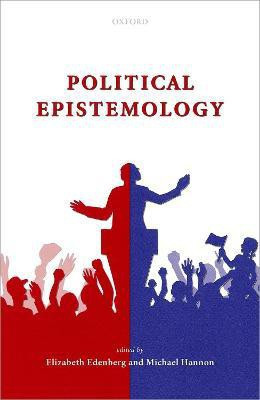
Political Epistemology(English, Hardcover, unknown)
- unknown
Paperback & Hardcover deals ―
Amazon IndiaGOFlipkart ₹ 11404SnapdealGOSapnaOnlineGOJain Book AgencyGOBooks Wagon₹413Book ChorGOCrosswordGODC BooksGOe-book & Audiobook deals ―
Amazon India GOGoogle Play Books GOAudible GO* Price may vary from time to time.
* GO = We're not able to fetch the price (please check manually visiting the website).
Know about the book -
Political Epistemology(English, Hardcover, unknown) is written by unknown and published by Oxford University Press. It's available with International Standard Book Number or ISBN identification 0192893335 (ISBN 10) and 9780192893338 (ISBN 13).
This collection explores one of the most rapidly growing area of philosophy: political epistemology. Epistemological issues are at the center of our political lives. It has become increasingly difficult to discern legitimate sources of evidence, misinformation spreads faster than ever, and the role of truth in politics has allegedly decayed in recent years. It is therefore no coincidence that political discourse is currently saturated with epistemic notions like "post-truth," "fake news," "truth decay," "echo chambers," and "alternative facts."Political Epistemology brings together leading philosophers to explore ways in which the analytic and conceptual tools of epistemology bear on political philosophy, and vice versa. It is organized around three broad themes: truth and knowledge in politics; epistemic problems for democracy; and disagreement and polarization. The contributors provide new and rich insights on topics such as: propaganda, fake news, weaponized skepticism, belief polarization, political disagreement, the epistemic value of democracy, voter ignorance, irrationality in politics, and identity politics. A premise underlying the development of political epistemology is that progress on certain foundational issues in both political philosophy and epistemology cannot be achieved without sharing insights across fields, beyond a certain point. This will be a foundational text for philosophers, political scientists, and political psychologists for years to come.
