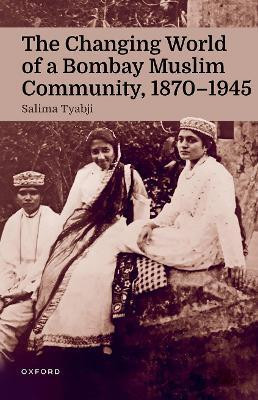
The Changing World of a Bombay Muslim Community, 1870 - 1945(English, Hardcover, Tyabji Salima)
- Tyabji Salima
Paperback & Hardcover deals ―
Amazon IndiaGOFlipkart ₹ 1693SnapdealGOSapnaOnlineGOJain Book AgencyGOBooks Wagon₹511Book ChorGOCrosswordGODC BooksGOe-book & Audiobook deals ―
Amazon India GOGoogle Play Books GOAudible GO* Price may vary from time to time.
* GO = We're not able to fetch the price (please check manually visiting the website).
Know about the book -
The Changing World of a Bombay Muslim Community, 1870 - 1945(English, Hardcover, Tyabji Salima) is written by Tyabji Salima and published by Oxford University Press. It's available with International Standard Book Number or ISBN identification 0192869744 (ISBN 10) and 9780192869746 (ISBN 13).
Muslims formed a disparate and unwieldy community in Bombay in the nineteenth century. The Islam that was professedly held in common by various groups could barely provide a sense of unity or cohesion to people so widely diverse in terms of language, customs, and also of forms and practices of belief. By the middle of the nineteenth century, a class of wealthy ship owners, ship-builders, and merchants, belonging to the varied communities that constituted the city, of which Muslims formed an important part, had emerged. This class was outward-looking, modern, and generally reformist in outlook: Gujarati or Maharashtrian, its goals of social reform, education, as well as political awareness, were gradually beginning to be perceived as goals held across communities, and increasingly across different regions. The questions that were being raised in the social turmoil of the period amongst Hindus were over issues of female education, the age of marriage, widow remarriage, and female seclusion. These issues were not foreign to the Muslim community; and the part played by Muslim leaders in Bombay in discussing and negotiating them was not an insignificant one, taking into account the size and relative backwardness of the community. Within this context, this book traces the evolving identity of a Bombay family and its changing social and political views in the late nineteenth and early twentieth centuries, using three main sources: their family journals, an individual memoir/journal, and letters written home from Europe.
