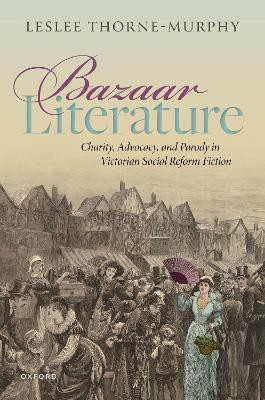
Bazaar Literature(English, Hardcover, Thorne-Murphy Leslee)
- Thorne-Murphy Leslee
Paperback & Hardcover deals ―
Amazon IndiaGOFlipkart ₹ 11702SnapdealGOSapnaOnlineGOJain Book AgencyGOBooks Wagon₹303Book ChorGOCrosswordGODC BooksGOe-book & Audiobook deals ―
Amazon India GOGoogle Play Books GOAudible GO* Price may vary from time to time.
* GO = We're not able to fetch the price (please check manually visiting the website).
Know about the book -
Bazaar Literature(English, Hardcover, Thorne-Murphy Leslee) is written by Thorne-Murphy Leslee and published by Oxford University Press. It's available with International Standard Book Number or ISBN identification 0192866885 (ISBN 10) and 9780192866882 (ISBN 13).
Bazaar Literature reorients our understanding of Victorian social reform fiction by reading it in light of the copious amount of literature generated for charity bazaars. Bazaars were ubiquitous during the nineteenth century, part of the vibrant and massive private sector response to a rapidly industrializing society. Typically organized and run by women, charity bazaars were often called "fancy fairs" since they specialized in ladies' hand-crafted "fancy" work. Indeed, they were a key method women used to intervene in political, social, and cultural affairs. Yet their conventional purpose--to raise money for charity--has led to their being widely overlooked and misunderstood.Bazaar Literature remedies these misconceptions by demonstrating how the literature written in conjunction with bazaars shaped the social, political, and literary movements of its time. This study draws upon a wide variety of texts printed to be sold at bazaars, including literature by Robert Louis Stevenson, Harriet Martineau, and Elizabeth Barrett Browning, alongside fictional depictions of fancy fairs by Charlotte Yonge, George Eliot, Frances Trollope, and Anthony Trollope. The book revises our understanding of the larger literary market in social reform fiction, revealing a parodic, self-critical strain that is paradoxically braided with strident political activism and its realist sensibilities.
