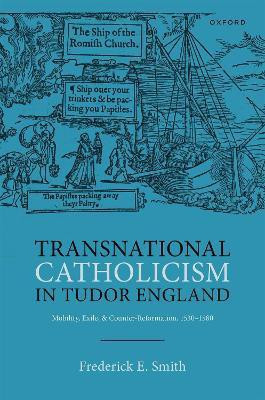
Transnational Catholicism in Tudor England(English, Hardcover, Smith Frederick E.)
- Smith Frederick E.
Paperback & Hardcover deals ―
Amazon IndiaGOFlipkart ₹ 15805SnapdealGOSapnaOnlineGOJain Book AgencyGOBooks Wagon₹736Book ChorGOCrosswordGODC BooksGOe-book & Audiobook deals ―
Amazon India GOGoogle Play Books GOAudible GO* Price may vary from time to time.
* GO = We're not able to fetch the price (please check manually visiting the website).
Know about the book -
Transnational Catholicism in Tudor England(English, Hardcover, Smith Frederick E.) is written by Smith Frederick E. and published by Oxford University Press. It's available with International Standard Book Number or ISBN identification 0192865994 (ISBN 10) and 9780192865991 (ISBN 13).
Transnational Catholicism in Tudor England details the relationship between transnational mobility and the development of Tudor Catholicism. Almost two hundred Catholics felt compelled to exile themselves from England rather than conform with the religious reformations inaugurated by Henry VIII and Edward VI. Frederick E. Smith explores how these emigres' physical mobility reconfigured their relationships with the men and women they left behind, and how it forced them to develop new relationships with individuals they encountered abroad. It analyses how the experiences of mobility and displacement catalysed a shift in their religious identities, in some ways broadening but in others narrowing their understandings of what it meant to be 'Catholic'. The author examines the role of these emigres as agents of religious exchange, circulating new doctrinal and devotional ideas throughout western Europe and forging new connections between them. By focussing particularly upon those individuals who subsequently returned to their homeland during Mary I's Catholic counter-reformation, the study also explores the lasting legacies of these emigres' displacement and mobility, both for the emigres themselves as they grappled with the difficulties of re-integration, but also for the broader development of English Catholicism. In this way, Transnational Catholicism in Tudor England deepens our understanding of the complex and sometimes contradictory ways in which exile shapes religio-political identities, but also underlines the importance of international mobility as a crucial factor in the development of English Catholicism and the wider European Catholic Church over the mid sixteenth century.
