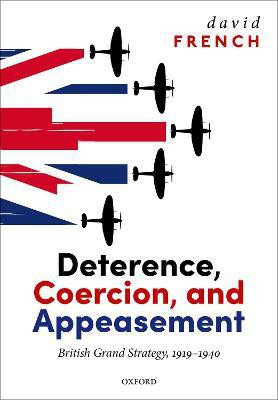
Deterrence, Coercion, and Appeasement(English, Hardcover, French David)
- French David
Paperback & Hardcover deals ―
Amazon IndiaGOFlipkart ₹ 17047SnapdealGOSapnaOnlineGOJain Book AgencyGOBooks Wagon₹1,707Book ChorGOCrosswordGODC BooksGOe-book & Audiobook deals ―
Amazon India GOGoogle Play Books GOAudible GO* Price may vary from time to time.
* GO = We're not able to fetch the price (please check manually visiting the website).
Know about the book -
Deterrence, Coercion, and Appeasement(English, Hardcover, French David) is written by French David and published by Oxford University Press. It's available with International Standard Book Number or ISBN identification 0192863355 (ISBN 10) and 9780192863355 (ISBN 13).
Deterrence, Coercion, and Appeasement presents a compelling and original survey of British grand strategy in the inter-war period. Whereas most existing accounts privilege either diplomacy and foreign affairs, intelligence, or military affairs more narrowly, this study underlines the inexorable relationships between foreign policy, grand strategy, military force, intelligence, finance and not least, domestic politics and public opinion. Britain was the world's only global power in the inter-war period, and it confronted problems on a global scale. Policy-makers sought two goals: peace with security. They did so successfully in the 1920s, partly due to favourable circumstances that made their task relatively easy, and partly because they understood the strengths and limitations of British power and knew how to wield them. The situation deteriorated rapidly in the 1930s, however, as the international system became increasingly unfavourable to Britain. Policy-makers proved less adept than their predecessors at meeting these new challenges, partly because those challenges were more formidable, but also because they lacked the self-confidence of their predecessors, who had held high office during the most difficult years of the First World War and who lacked their understanding of how to wield the lever of international power. The study ends by providing a new and more sophisticated account of how and why Neville Chamberlain appeased the fascist powers in the late 1930s, and why Winston Churchill opposed him and eventually supplanted him in May 1940.
