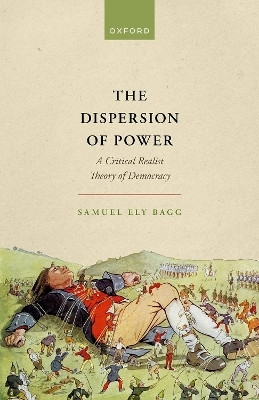
The Dispersion of Power(English, Hardcover, Bagg Samuel Ely)
- Bagg Samuel Ely
Paperback & Hardcover deals ―
Amazon IndiaGOFlipkart ₹ 3197SnapdealGOSapnaOnlineGOJain Book AgencyGOBooks Wagon₹11,474Book ChorGOCrosswordGODC BooksGOe-book & Audiobook deals ―
Amazon India GOGoogle Play Books GOAudible GO* Price may vary from time to time.
* GO = We're not able to fetch the price (please check manually visiting the website).
Know about the book -
The Dispersion of Power(English, Hardcover, Bagg Samuel Ely) is written by Bagg Samuel Ely and published by Oxford University Press. It's available with International Standard Book Number or ISBN identification 0192848828 (ISBN 10) and 9780192848826 (ISBN 13).
The Dispersion of Power is an urgent call to rethink centuries of conventional wisdom about what democracy is, why it matters, and how to make it better. Drawing from history, social science, psychology, and critical theory, it explains why elections do not and cannot realize the classic ideal of popular rule, and why prevailing strategies of democratic reform often make things worse. Instead, Bagg argues, we should see democracy as a way of protecting public power from capture-an alternative vision that is at once more realistic and more inspiring.Despite their many shortcomings, real-world elections do prevent the most extreme forms of tyranny, and are therefore indispensable. In dealing with the vast inequalities that remain, however, we cannot rely on standard solutions such as electoral reform, direct democracy, deliberation, and participatory governance. Instead, Bagg shows, protecting and enriching democracy requires addressing underlying inequalities of power directly. In part, this entails substantive policies attacking the advantages of wealthy elites. Even more crucially, deepening democracy requires the organization of oppositional, countervailing power among ordinary people. Neither task is easy, but historical precedents exist in both cases-and if democracy is to survive contemporary crises, leaders and citizens alike must find ways to revive and reinvent these essential democratic practices for the 21st century.
