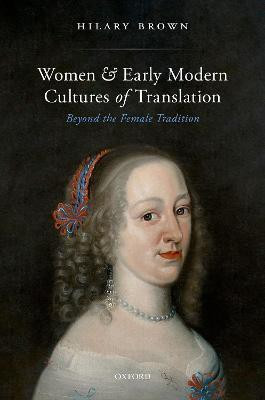
Women and Early Modern Cultures of Translation(English, Hardcover, Brown Hilary)
- Brown Hilary
Paperback & Hardcover deals ―
Amazon IndiaGOFlipkart ₹ 12176SnapdealGOSapnaOnlineGOJain Book AgencyGOBooks Wagon₹279Book ChorGOCrosswordGODC BooksGOe-book & Audiobook deals ―
Amazon India GOGoogle Play Books GOAudible GO* Price may vary from time to time.
* GO = We're not able to fetch the price (please check manually visiting the website).
Know about the book -
Women and Early Modern Cultures of Translation(English, Hardcover, Brown Hilary) is written by Brown Hilary and published by Oxford University Press. It's available with International Standard Book Number or ISBN identification 0192844342 (ISBN 10) and 9780192844347 (ISBN 13).
Women and Early Modern Cultures of Translation: Beyond the Female Tradition is a major new intervention in research on early modern translation and will be an essential point of reference for anyone interested in the history of women translators. Research on women translators has often focused on early modern England; the example of early modern England has been taken as the norm for the rest of the continent and has shaped research on gender and translation more generally. This book brings a new European perspective to the field by introducing the case of Germany. It draws attention to forty women who can be identified as translators in sixteenth- and seventeenth-century Germany and shows how their work does not fit easily into traditional narratives about marginalization and subversiveness. The study uses the example of Germany to argue against reading the work of translating women primarily through the lens of gender and to challenge claims about the existence of a female translation tradition which transcends the boundaries of time and place. Broadening our perspective to include Germany provides a more nuanced and informed account of the position of women within European translation cultures and forces us to rethink gender as a category of analysis in translation history. The book makes the case for a new 'woman-interrogated' approach to translation history (to borrow a concept from Carol Maier) and as such it will provide a blueprint for future work in the area.
