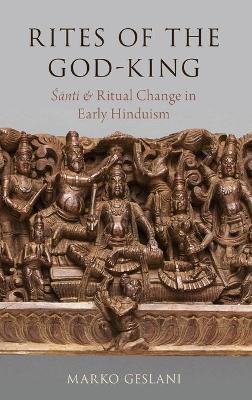
Rites of the God-King(English, Hardcover, Geslani Marko)
- Geslani Marko
Paperback & Hardcover deals ―
Amazon IndiaGOFlipkart ₹ 408SnapdealGOSapnaOnlineGOJain Book AgencyGOBooks Wagon₹303Book ChorGOCrosswordGODC BooksGOe-book & Audiobook deals ―
Amazon India GOGoogle Play Books GOAudible GO* Price may vary from time to time.
* GO = We're not able to fetch the price (please check manually visiting the website).
Know about the book -
Rites of the God-King(English, Hardcover, Geslani Marko) is written by Geslani Marko and published by Oxford University Press Inc. It's available with International Standard Book Number or ISBN identification 0190862882 (ISBN 10) and 9780190862886 (ISBN 13).
Scholars of Vedic religion have long recognized the centrality of ritual categories to Indian thought. There have been few successful attempts, however, to bring the same systematic rigor of Vedic Scholarship to bear on later "Hindu" ritual. Excavating the deep history of a prominent ritual category in "classical" Hindu texts, Geslani traces the emergence of a class of rituals known as Santi, or appeasement. This ritual, intended to counteract ominous omens, developed from the intersection of the fourth Vedathe oft-neglected Atharvavedaand the emergent tradition of astral science (Jyotisastra) sometime in the early first millennium, CE. Its development would come to have far-reaching consequences on the ideal ritual life of the king in early-medieval Brahmanical society. The mantric transformations involved in the history of santi led to the emergence of a politicized ritual culture that could encompass both traditional Vedic and newer Hindu performers and practices.From astrological appeasement to gift-giving, coronation, and image worship, Rites of the God-King chronicles the multiple lives and afterlives of a single ritual mode, unveiling the always-inventive work of the priesthood to imagine and enrich royal power. Along the way, Geslani reveals the surprising role of astrologers in Hindu history, elaborates conceptions of sin and misfortune, and forges new connections between medieval texts and modern practices. In a work that details ritual forms that were dispersed widely across Asia, he concludes with a reflection on the nature of orthopraxy, ritual change, and the problem of presence in the Hindu tradition.
