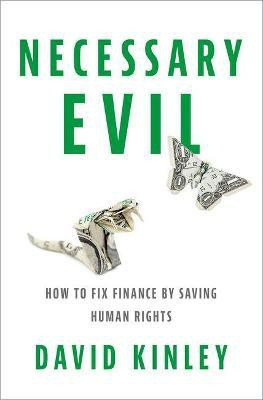
Necessary Evil(English, Hardcover, Kinley David)
- Kinley David
Paperback & Hardcover deals ―
Amazon IndiaGOFlipkart ₹ 1160SnapdealGOSapnaOnlineGOJain Book AgencyGOBooks Wagon₹527Book ChorGOCrosswordGODC BooksGOe-book & Audiobook deals ―
Amazon India GOGoogle Play Books GOAudible GO* Price may vary from time to time.
* GO = We're not able to fetch the price (please check manually visiting the website).
Know about the book -
Necessary Evil(English, Hardcover, Kinley David) is written by Kinley David and published by Oxford University Press Inc. It's available with International Standard Book Number or ISBN identification 0190691123 (ISBN 10) and 9780190691127 (ISBN 13).
Finance is the evil we cannot live without. It governs almost every aspect of our lives and has the power to liberate as well as enslave. With the worldas total financial assetsavalued at a staggering $300 trillionabeing four times larger than the combined output of all the worldas economies, there is, apparently, plenty to go around. Yet, while proponents of finance-driven capitalism point to the trickle-down effect as its contribution to wealth redistribution, there are still nearly a billion people across the globe existing on less than $2 a day; 14 percent of Americans are living below the official poverty line; and disparities in wealth equality everywhere have reached unprecedented levels. Evidently a trickle is not enough.How can this be when so much wealth abounds, and when finance is supposedly chastened and reformed after its latest global crisis? How, especially, can it be in an age when human rights are more loudly proclaimed than ever before? Can the financial sector be made to shoulder more of the burden of spreading wealth, reducing poverty, and protecting rights? And if so, what role can human rights play in making it happen?In answering these questions, David Kinley draws on a vast array of material from bankers, economists, lawyers, and politicians, as well as human rights activists, philosophers, historians and anthropologists, alongside his own experiences working in the field. Necessary Evil shows how finance can shed its conceit, return to its role as the economyas servant not its master, and regain the public trust and credibility it has so spectacularly lost over the past decadeaall by helping human rights, not harming them.
