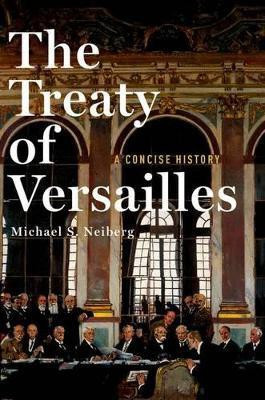
The Treaty of Versailles: A Concise History(English, Hardcover, Neiberg Michael S.)
- Neiberg Michael S.
Paperback & Hardcover deals ―
Amazon IndiaGOFlipkart ₹ 1863SnapdealGOSapnaOnlineGOJain Book AgencyGOBooks WagonGOBook ChorGOCrosswordGODC BooksGOe-book & Audiobook deals ―
Amazon India GOGoogle Play Books GOAudible GO* Price may vary from time to time.
* GO = We're not able to fetch the price (please check manually visiting the website).
Know about the book -
The Treaty of Versailles: A Concise History(English, Hardcover, Neiberg Michael S.) is written by Neiberg Michael S. and published by Oxford University Press Inc. It's available with International Standard Book Number or ISBN identification 0190659181 (ISBN 10) and 9780190659189 (ISBN 13).
Signed on 28 June 1919 between Germany and the principal Allied powers, the Treaty of Versailles formally ended World War I. Problematic from the very beginning, even its contemporaries saw the treaty as a mediocre compromise, creating a precarious order in Europe and abroad and destined to fall short of ensuring lasting peace. At the time, observers read the treaty through competing lenses: a desire for peace after five years of disastrous war, demands for vengeance against Germany, the uncertain future of colonialism, and, most alarmingly, the emerging threat of Bolshevism. A century after its signing, we can look back at how those developments evolved through the twentieth century, evaluating the treaty and its consequences with unprecedented depth of perspective. The author of several award-winning books, Michael S. Neiberg provides a lucid and authoritative account of the Treaty of Versailles, explaining the enormous challenges facing those who tried to put the world back together after the global destruction of the World War I. Rather than assessing winners and losers, this compelling book analyzes the many subtle factors that influenced the treaty and the dominant, at times ambiguous role of the 'Big Four' leaders -- Woodrow Wilson of the United States, David Lloyd George of Great Britain, Vittorio Emanuele Orlando of Italy, and Georges Clemenceau of France. The Treaty of Versailles was not solely responsible for the catastrophic war that crippled Europe and the world just two decades later, but it played a critical role. As Neiberg reminds us, to understand decolonization, World War II, the Cold War, and even the complex world we inhabit today, there is no better place to begin than with World War I and the treaty that tried, and perhaps failed, to end it.
