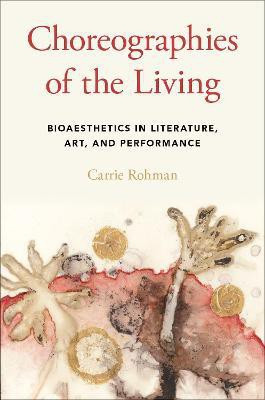
Choreographies of the Living(English, Paperback, Rohman Carrie)
- Rohman Carrie
Paperback & Hardcover deals ―
Amazon IndiaGOFlipkart ₹ 5348SnapdealGOSapnaOnlineGOJain Book AgencyGOBooks Wagon₹1,289Book ChorGOCrosswordGODC BooksGOe-book & Audiobook deals ―
Amazon India GOGoogle Play Books GOAudible GO* Price may vary from time to time.
* GO = We're not able to fetch the price (please check manually visiting the website).
Know about the book -
Choreographies of the Living(English, Paperback, Rohman Carrie) is written by Rohman Carrie and published by Oxford University Press Inc. It's available with International Standard Book Number or ISBN identification 0190604417 (ISBN 10) and 9780190604417 (ISBN 13).
Choreographies of the Living explores the implications of shifting from viewing art as an exclusively human undertaking to recognizing it as an activity that all living creatures enact. Carrie Rohman reveals the aesthetic impulse itself to be profoundly trans-species, and in doing so she revises our received wisdom about the value and functions of artistic capacities. Countering the long history of aesthetic theory in the West--beginning with Plato and Aristotle, and moving up through the recent claims of "neuroaesthetics"--Rohman challenges the likening of aesthetic experience to an exclusively human form of judgment. Turning toward the animal in new frameworks for understanding aesthetic impulses, Rohman emphasizes a deep coincidence of humans' and animals' elaborations of fundamental life forces. Examining a range of literary, visual, dance, and performance works and processes by modernist and contemporary figures such as Isadora Duncan, D. H. Lawrence, Virginia Woolf, and Merce Cunningham, Rohman reconceives the aesthetic itself not as a distinction separating humans from other animals, but rather as a framework connecting embodied beings. Her view challenges our species to acknowledge the shared status of art-making, one of our most hallowed and formerly exceptional activities.
