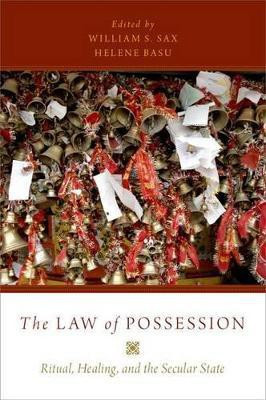
The Law of Possession(English, Paperback, unknown)
- unknown
Paperback & Hardcover deals ―
Amazon IndiaGOFlipkart ₹ 7613SnapdealGOSapnaOnlineGOJain Book AgencyGOBooks Wagon₹215Book ChorGOCrosswordGODC BooksGOe-book & Audiobook deals ―
Amazon India GOGoogle Play Books GOAudible GO* Price may vary from time to time.
* GO = We're not able to fetch the price (please check manually visiting the website).
Know about the book -
The Law of Possession(English, Paperback, unknown) is written by unknown and published by Oxford University Press Inc. It's available with International Standard Book Number or ISBN identification 0190275758 (ISBN 10) and 9780190275754 (ISBN 13).
Rituals combining healing with spirit possession and court-like proceedings are found around the world and throughout history. A person suffers from an illness that cannot be cured, for example, and in order to be healed performs a ritual involving a prosecution and a defense, a judge and witnesses. Divine beings then speak through oracles, spirits possess the victim and are exorcized, and local gods intervene to provide healing and justice.Such practices seem to be the very antithesis of modernity, and many modern, secular states have systematically attempted to eliminate them. What is the relationship between healing, spirit possession, and the law, and why are they so often combined? Why are such rituals largely absent from modern societies, and what happens to them when the state attempts to expunge them from their health and justice systems, or even to criminalize them? Despite the prevalence of rituals involving some or all of these elements, this volume represents the first attempt to compare and analyze them systematically.The Law of Possession brings together historical and contemporary case studies from East Asia, South Asia, and Africa, and argues that despite consistent attempts by modern, secular states to discourage, eliminate, and criminalize them, these types of rituals persist and even thrive because they meet widespread human needs.
