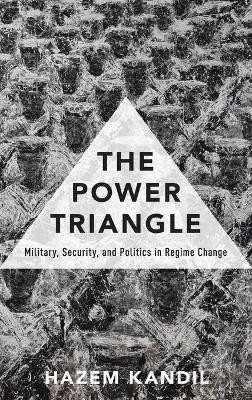
The Power Triangle(English, Hardcover, Kandil Hazem)
- Kandil Hazem
Paperback & Hardcover deals ―
Amazon IndiaGOFlipkart ₹ 7858SnapdealGOSapnaOnlineGOJain Book AgencyGOBooks Wagon₹209Book ChorGOCrosswordGODC BooksGOe-book & Audiobook deals ―
Amazon India GOGoogle Play Books GOAudible GO* Price may vary from time to time.
* GO = We're not able to fetch the price (please check manually visiting the website).
Know about the book -
The Power Triangle(English, Hardcover, Kandil Hazem) is written by Kandil Hazem and published by Oxford University Press Inc. It's available with International Standard Book Number or ISBN identification 0190239204 (ISBN 10) and 9780190239206 (ISBN 13).
Iran, Egypt, and Turkey all experienced remarkably similar coup-installed regimes in the middle of the twentieth century, and shared comparable state-building ambitions. Despite these similarities, each followed a different trajectory: Iran became an absolutist monarchy that was overthrown from below; Turkey evolved into a limited democracy; and Egypt metamorphosed into a police state. What accounts for this divergence? In The Power Triangle, Hazem Kandil attributes the different outcomes to the power struggle between the political, military, and security components of each regime. Following a coup, officers immediately divide their labor: one group runs government, another supervises the military, and the third handles security. Their interests initially overlap, but begin to vary as each group becomes identified with its own institution. The politicians wish to remain in power indefinitely, but need the support of the custodians of violence; military officers prefer to withdraw from politics after implementing the needed reforms, since their prerogatives are usually guaranteed regardless of regime type, and politicization corrupts the corps; and security men strive to consolidate authoritarianism in order to maintain the inflated privileges they have acquired during the emergency period following the coup. Driven by conflicting agendas, the three partners struggle to control the regime. Through comparative historical analysis, Kandil demonstrates that the new regime is shaped and reshaped through the recurrent clashes and changing alliances between the team of rivals in this 'power triangle.' Bringing realism into domestic politics, The Power Triangle demonstrates that we cannot gain a clear understanding of pivotal events in Iran, Egypt, and Turkey without a firm grasp of the balance of power within the ruling bloc of each country.
