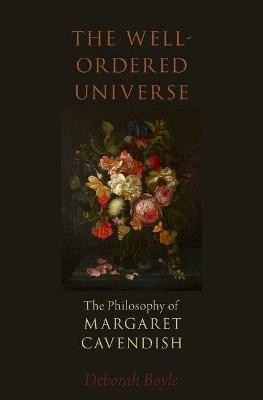
The Well-Ordered Universe(English, Hardcover, Boyle Deborah)
- Boyle Deborah
Paperback & Hardcover deals ―
Amazon IndiaGOFlipkart ₹ 14070SnapdealGOSapnaOnlineGOJain Book AgencyGOBooks Wagon₹364Book ChorGOCrosswordGODC BooksGOe-book & Audiobook deals ―
Amazon India GOGoogle Play Books GOAudible GO* Price may vary from time to time.
* GO = We're not able to fetch the price (please check manually visiting the website).
Know about the book -
The Well-Ordered Universe(English, Hardcover, Boyle Deborah) is written by Boyle Deborah and published by Oxford University Press Inc. It's available with International Standard Book Number or ISBN identification 0190234806 (ISBN 10) and 9780190234805 (ISBN 13).
The prolific Margaret Cavendish (1623-1673) published books on natural philosophy as well as stories, plays, poems, orations, allegories, and letters. Her mature philosophical system offered a unique panpsychist theory of Nature as composed of a continuous, non-atomistic, perceiving, knowing matter. In contrast to the dominant philosophical thinking of her day, Cavendish argued that all matter has free will and can choose whether or not to follow Nature's rules. The Well-Ordered Universe explores the development of Cavendish's natural philosophy from the atomism of her 1653 poems to the panpsychist materialism of her 1668 Grounds of Natural Philosophy.Deborah Boyle argues that her natural philosophy, her medical theories, and her social and political philosophy are all informed by an underlying concern with order, regularity, and rule-following. This focus on order reveals interesting connections among apparently disparate elements of Cavendish's philosophical program, including her views on gender, on animals and the environment, and on sickness and health. Focusing on the role of order in Cavendish's philosophy also helps reveal key differences between her natural philosophy and her more conservative social and political philosophy. Cavendish believed that humans' special desire for public recognition often leads to an unruly ambition, causing humans to disrupt society in ways not seen in the rest of Nature. Thus, The Well-Ordered Universe defends Cavendish as a royalist who endorsed absolute monarchy and a rigid social hierarchy for maintaining order in human society.
