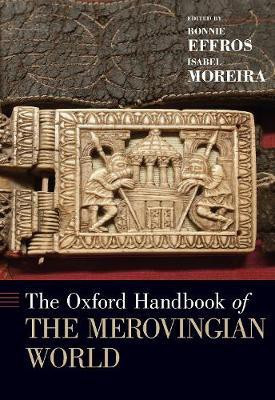
The Oxford Handbook of the Merovingian World(English, Hardcover, unknown)
- unknown
Paperback & Hardcover deals ―
Amazon IndiaGOFlipkart ₹ 31574SnapdealGOSapnaOnlineGOJain Book AgencyGOBooks Wagon₹247Book ChorGOCrosswordGODC BooksGOe-book & Audiobook deals ―
Amazon India GOGoogle Play Books GOAudible GO* Price may vary from time to time.
* GO = We're not able to fetch the price (please check manually visiting the website).
Know about the book -
The Oxford Handbook of the Merovingian World(English, Hardcover, unknown) is written by unknown and published by Oxford University Press Inc. It's available with International Standard Book Number or ISBN identification 0190234180 (ISBN 10) and 9780190234188 (ISBN 13).
The Merovingian era is one of the best studied yet least well known periods of European history. From the fifth to the eighth centuries, the inhabitants of Gaul (what now comprises France, southern Belgium, Luxembourg, Rhineland Germany, and part of modern Switzerland), a mix of Gallo-Roman inhabitants and Germanic arrivals under the political control of the Merovingian dynasty, sought to preserve, use, and reimagine the political, cultural, and religious power of ancient Rome while simultaneously forging the beginnings of what would become medieval European culture.The forty-six essays included in this volume highlight why the Merovingian era is at the heart of historical debates about what happened to Western Europe after the fall of the Roman Empire. The essays demonstrate that the inhabitants of the Merovingian kingdoms in these centuries created a culture that was the product of these traditions and achieved a balance between the world they inherited and the imaginative solutions they bequeathed to Europe. The Handbook highlights new perspectives and scientific approaches that shape our changing view of this extraordinary era by showing that Merovingian Gaul was situated at the crossroads of Europe, connecting the Mediterranean and the British Isles with the Byzantine empire, and it benefited from the global reach of the late Roman Empire. It tells the story of the Merovingian world through archaeology, bio-archaeology, architecture, hagiographic literature, history, liturgy, visionary literature and eschatology, patristics, numismatics, and material culture.
