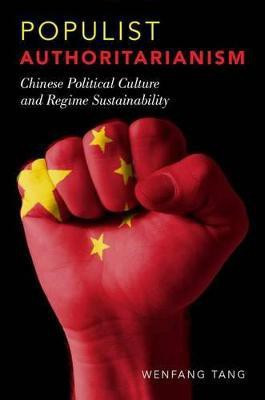
Populist Authoritarianism(English, Hardcover, Tang Wenfang)
- Tang Wenfang
Paperback & Hardcover deals ―
Amazon IndiaGOFlipkart ₹ 2744SnapdealGOSapnaOnlineGOJain Book AgencyGOBooks Wagon₹4,083Book ChorGOCrosswordGODC BooksGOe-book & Audiobook deals ―
Amazon India GOGoogle Play Books GOAudible GO* Price may vary from time to time.
* GO = We're not able to fetch the price (please check manually visiting the website).
Know about the book -
Populist Authoritarianism(English, Hardcover, Tang Wenfang) is written by Tang Wenfang and published by Oxford University Press Inc. It's available with International Standard Book Number or ISBN identification 0190205784 (ISBN 10) and 9780190205782 (ISBN 13).
Populist Authoritarianism focuses on the Chinese Communist Party, which governs the world's largest population in a single-party authoritarian state. Wenfang Tang attempts to explain the seemingly contradictory trends of the increasing number of protests on the one hand, and the results of public opinion surveys that consistently show strong government support on the other hand. The book points to the continuity from the CCP's revolutionary experiences to its current governing style, even though China has changed in many ways on the surface in the post-Mao era. The book proposes a theoretical framework of Populist Authoritarianism with six key elements, including the Mass Line ideology, accumulation of social capital, public political activism and contentious politics, a government that is responsive to hype, weak political and civil institutions, and a high level of regime trust. These traits of Populist Authoritarianism are supported by empirical evidence drawn from multiple public opinion surveys conducted from 1987 to 2014. Although the CCP currently enjoys strong public support, such a system is inherently vulnerable due to its institutional deficiency. Public opinion can swing violently due to policy failure and the up and down of a leader or an elite faction. The drastic change of public opinion cannot be filtered through political institutions such as elections and the rule of law, creating system-wide political earthquakes.
