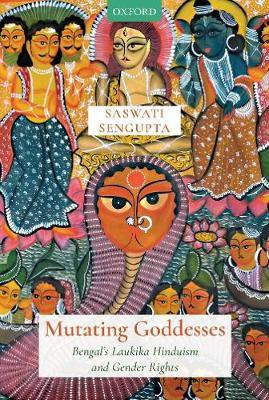
Mutating Goddesses(English, Hardcover, Sengupta Saswati)
- Sengupta Saswati
Paperback & Hardcover deals ―
Amazon IndiaGOFlipkart ₹ 1686SnapdealGOSapnaOnlineGOJain Book Agency₹1795Books Wagon₹1,418Book ChorGOCrosswordGODC BooksGOe-book & Audiobook deals ―
Amazon India GOGoogle Play Books GOAudible GO* Price may vary from time to time.
* GO = We're not able to fetch the price (please check manually visiting the website).
Know about the book -
Mutating Goddesses(English, Hardcover, Sengupta Saswati) is written by Sengupta Saswati and published by OUP India. It's available with International Standard Book Number or ISBN identification 0190124105 (ISBN 10) and 9780190124106 (ISBN 13).
Mutating Goddesses traces the shifting fortunes of four specific Hindu deities - Manasa, Candi, Sasthi and Laksmi--- from the fifteenth century to the present time. It focuses on the goddess-invested tradition of Bengal's Hinduism to argue for a historical evolution/devolution of divinities in tandem with sectarian interests and illumines in the process the knotted correlation of gender, caste and class in the sanctioning of female subjectivities through goddess formation. The critical studies of Hindu goddesses have been dominated by the sastrik perspective deriving from the Sanskrit scriptures authorized by the male Brahman. But there are religious practices and beliefs under the broad rubric of Hinduism that are neither governed by the male Brahman nor articulated in Sanskrit. It is this vibrant laukika archive-- - considered low from the hegemonic perspective---that Mutating Goddesses explores to realize the politic trafficking between this realm and the sastrik. The book excavates the multiple and layered heritage of the region which includes tribal culture, Buddhism, Tantricism, and so on, as is available in rituals, proverbs, verses, circulating myths, poetic genres and kathas, caste manuals, census records etc to illustrate how tradition is a matter of strategic selection.
