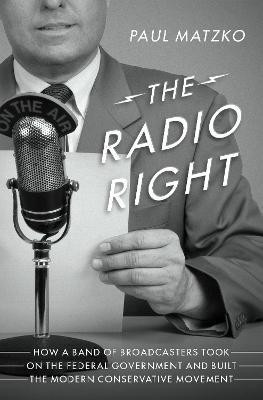
The Radio Right(English, Hardcover, Matzko Paul)
- Matzko Paul
Paperback & Hardcover deals ―
Amazon IndiaGOFlipkart ₹ 4390SnapdealGOSapnaOnlineGOJain Book AgencyGOBooks Wagon₹3,405Book ChorGOCrosswordGODC BooksGOe-book & Audiobook deals ―
Amazon India GOGoogle Play Books GOAudible GO* Price may vary from time to time.
* GO = We're not able to fetch the price (please check manually visiting the website).
Know about the book -
The Radio Right(English, Hardcover, Matzko Paul) is written by Matzko Paul and published by Oxford University Press Inc. It's available with International Standard Book Number or ISBN identification 0190073225 (ISBN 10) and 9780190073220 (ISBN 13).
In the past few years, trust in traditional media has reached new lows. Many Americans disbelieve what they hear from the "mainstream media," and have turned to getting information from media echo chambers which are reflective of a single party or ideology. In this book, Paul Matzko reveals that this is not the first such moment in modern American history. The Radio Right tells the story of the 1960s far Right, who were frustrated by what they perceived to be liberal bias in the national media, particularly the media's sycophantic relationship with the John F. Kennedy administration. These people turned for news and commentary to a resurgent form of ultra-conservative mass media: radio. As networks shifted their resources to television, radio increasingly became the preserve of cash-strapped, independent station owners who were willing to air the hundreds of new right-wing programs that sprang up in the late 1950s and 1960s. By the early 1960s, millions of Americans listened each week to conservative broadcasters, the most prominent of which were clergy or lay broadcasters from across the religious spectrum, including Carl McIntire, Billy James Hargis, and Clarence Manion. Though divided by theology, these speakers were united by their distrust of political and theological liberalism and their antipathy towards JFK. The political influence of the new Radio Right quickly became apparent as the broadcasters attacked the Kennedy administration's policies and encouraged grassroots conservative activism on a massive scale. Matzko relates how, by 1963, Kennedy was so alarmed by the rise of the Radio Right that he ordered the Internal Revenue Service and Federal Communications Commission to target conservative broadcasters with tax audits and enhanced regulatory scrutiny via the Fairness Doctrine. Right-wing broadcasters lost hundreds of stations and millions of listeners. Not until the deregulation of the airwaves under the Carter and Reagan administrations would right-wing radio regain its former prominence. The Radio Right provides the essential pre-history for the last four decades of conservative activism, as well as the historical context for current issues of political bias and censorship in the media.
