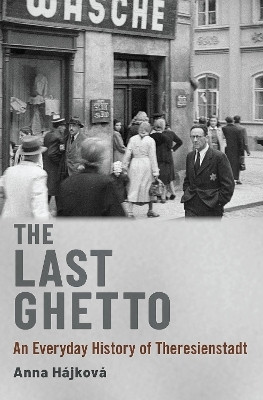
The Last Ghetto(English, Hardcover, Hajkova Anna)
- Hajkova Anna
Paperback & Hardcover deals ―
Amazon IndiaGOFlipkart ₹ 4474SnapdealGOSapnaOnlineGOJain Book AgencyGOBooks Wagon₹293Book ChorGOCrosswordGODC BooksGOe-book & Audiobook deals ―
Amazon India GOGoogle Play Books GOAudible GO* Price may vary from time to time.
* GO = We're not able to fetch the price (please check manually visiting the website).
Know about the book -
The Last Ghetto(English, Hardcover, Hajkova Anna) is written by Hajkova Anna and published by Oxford University Press Inc. It's available with International Standard Book Number or ISBN identification 0190051779 (ISBN 10) and 9780190051778 (ISBN 13).
Terezin, as it was known in Czech, or Theresienstadt as it was known in German, was operated by the Nazis between November 1941 and May 1945 as a transit ghetto for Central and Western European Jews before their deportation for murder in the East. Terezin was the last ghetto to be liberated, one day after the end of World War II.The Last Ghetto is the first in-depth analytical history of a prison society during the Holocaust. Rather than depict the prison society which existed within the ghetto as an exceptional one, unique in kind and not understandable by normal analytical methods, Anna Hajkova argues that such prison societies that developed during the Holocaust are best understood as simply other instances of the societies human beings create under normal circumstances. Challenging conventional claims of Holocaust exceptionalism, Hajkova insists instead that we ought to view the Holocaust with the same analytical tools as other historical events. The prison society of Terezin produced its own social hierarchies under which seemingly small differences among prisoners (of age, ethnicity, or previous occupation) could determine whether one ultimately lived or died. During the three and a half years of the camp's existence, prisoners created their own culture and habits, bonded, fell in love, and forged new families. Based on extensive archival research in nine languages and on empathetic reading of victim testimonies, The Last Ghetto is a transnational, cultural, social, gender, and organizational history of Terezin, revealing how human society works in extremis and highlighting the key issues of responsibility, agency and its boundaries, and belonging.
