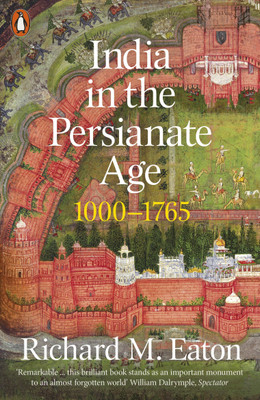
India in the Persianate Age(English, Paperback, Eaton Richard M.)
- Eaton Richard M.
Paperback & Hardcover deals ―
Amazon IndiaGOFlipkart ₹ 719SnapdealGOSapnaOnlineGOJain Book Agency₹800Books Wagon₹480Book ChorGOCrosswordGODC BooksGOe-book & Audiobook deals ―
Amazon India GOGoogle Play Books GOAudible GO* Price may vary from time to time.
* GO = We're not able to fetch the price (please check manually visiting the website).
Know about the book -
India in the Persianate Age(English, Paperback, Eaton Richard M.) is written by Eaton Richard M. and published by Penguin Books Ltd. It's available with International Standard Book Number or ISBN identification 0141985399 (ISBN 10) and 9780141985398 (ISBN 13).
SHORTLISTED FOR THE 2020 CUNDILL HISTORY PRIZE 'Remarkable ... this brilliant book stands as an important monument to an almost forgotten world' William Dalrymple, Spectator A sweeping, magisterial new history of India from the middle ages to the arrival of the British The Indian subcontinent might seem a self-contained world. Protected by vast mountains and seas, it has created its own religions, philosophies and social systems. And yet this ancient land experienced prolonged and intense interaction with the peoples and cultures of East and Southeast Asia, Europe, Africa and, especially, Central Asia and the Iranian plateau between the eleventh and eighteenth centuries. Richard M. Eaton's wonderful new book tells this extraordinary story with relish and originality. His major theme is the rise of 'Persianate' culture - a many-faceted transregional world informed by a canon of texts that circulated through ever-widening networks across much of Asia. Introduced to India in the eleventh century by dynasties based in eastern Afghanistan, this culture would become thoroughly indigenized by the time of the great Mughals in the sixteenth, seventeenth, and eighteenth centuries. This long-term process of cultural interaction and assimilation is reflected in India's language, literature, cuisine, attire, religion, styles of rulership and warfare, science, art, music, architecture, and more. The book brilliantly elaborates the complex encounter between India's Sanskrit culture - which continued to flourish and grow throughout this period - and Persian culture, which helped shape the Delhi Sultanate, the Mughal Empire and a host of regional states, and made India what it is today.
