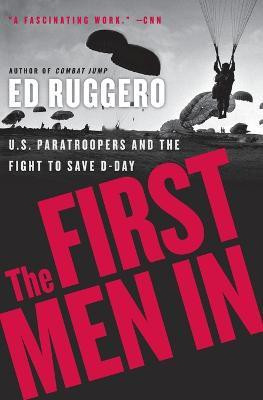
The First Men In(English, Paperback, Ruggero Ed)
- Ruggero Ed
Paperback & Hardcover deals ―
Amazon IndiaGOFlipkart ₹ 1777SnapdealGOSapnaOnlineGOJain Book AgencyGOBooks Wagon₹480Book ChorGOCrosswordGODC BooksGOe-book & Audiobook deals ―
Amazon India GOGoogle Play Books GOAudible GO* Price may vary from time to time.
* GO = We're not able to fetch the price (please check manually visiting the website).
Know about the book -
The First Men In(English, Paperback, Ruggero Ed) is written by Ruggero Ed and published by HarperCollins Publishers Inc. It's available with International Standard Book Number or ISBN identification 006073129X (ISBN 10) and 9780060731298 (ISBN 13).
Of the nearly 15,000 Allied paratroopers dropped into France on D–14 (two weeks before D–Day), only one regiment––the 3,000 men of the 505 Parachute Infantry––had been tested in battle, and so they were given the toughest mission. For a few critical days, while the fate of occupied Europe hung in the balance, these troopers held their ground against savage assaults. In doing so, they changed the course of World War II. Within hours of landing in Normandy, the paratroopers of the 505 Parachute Infantry Regiment had gathered in the darkened fields outside Ste. Mere Eglise and moved rapidly to the edge of town. A French civilian pointed out the German positions, and in a lightning attack the GI's liberated the first town in Europe, planting the United States flag on top of city hall. Shortly after daylight, as reports streamed in, Allied commanders were shocked to learn that the 505 was the only one of six U.S. parachute regiments to hit its mark. Because Ste. Mere Eglise was the gateway to Utah Beach, the regiment––now fighting virtually alone––hastily dug in to await the German counterattacks that were sure to follow. Colonel Bill Ekman and his men held critical ground: half of the American invasion force was to pass through this area, and that would only happen if the 505 held Ste. Mere Eglise. It was an almost unimaginable challenge: at ten that morning the German attacks began, and by early afternoon enemy armored columns were slamming GI lines from three directions in an attempt to reach the vulnerable invasion beaches. But despite heavy losses, the 505 was still in control of Ste. Mere Eglise on June 8, when they were relieved by units that came across the beach. When their unseasoned replacements faltered, U.S. commanders called on the exhausted paratroopers to stay in the fight and lead the series of ground assaults that would secure the invasion. A single unit, a relative handful of men, had helped turn the course of one of the most important battles of the war.
